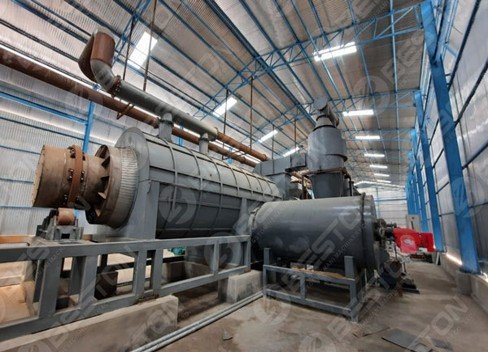
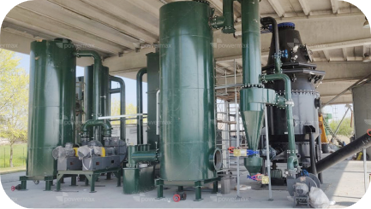
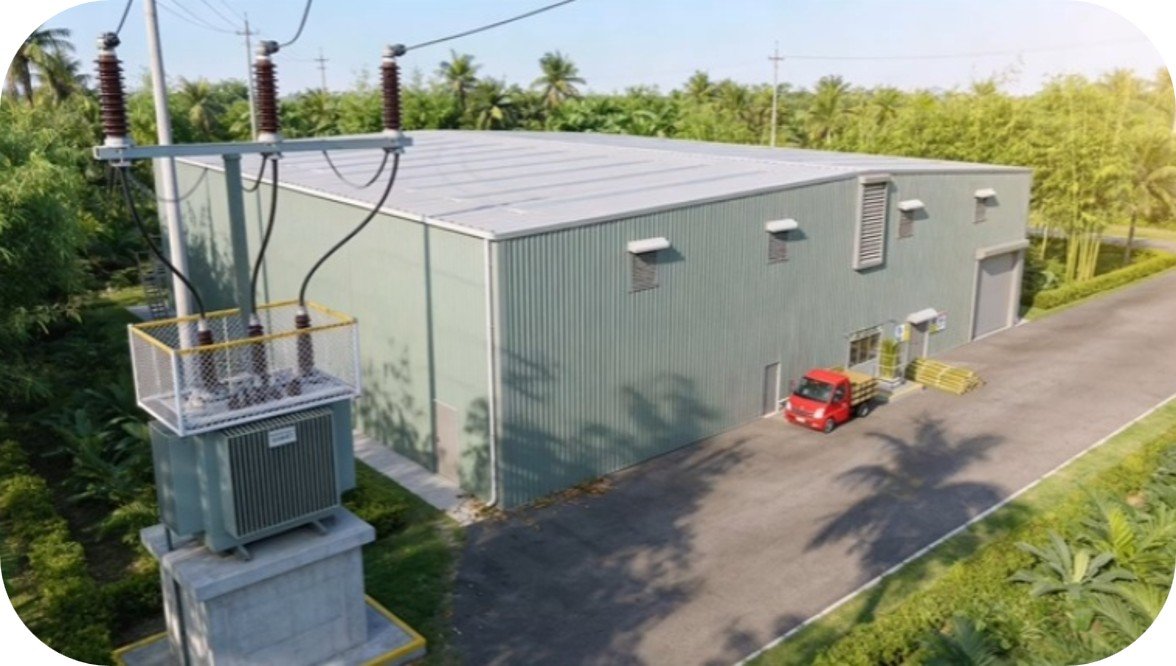
HDPP – Hybrid Decarbonization Power Plants (a modern way of old Chinese pyrolysis, right side)
In a 24-hour cycle, a single facility sequesters 16.2 tons of CO2 from the atmosphere (5,913 tons annually),
converting it into biochar—a permanent carbon sink lasting up to 4,000 years.
Each ton of biochar can yield three tradable CO2 Removal Credits (CORCs), highly valued
(currently at $150 to $200 each) in international markets as digital commodities.
Numerous engineering firms like one in Italy (right side) provide gasifier and pyrolysis solutions, primarily for rice husk and municipal waste biomass with hundreds of installations worldwide.
However, there is currently no company offering comprehensive turn-key decarbonization plants tailored for cultivated bamboo, serving as a complete solution.
The Hybrid Decarbonation Power Plant (HDPP) concept of BST has been developed for:
• Short construction times
A global market fit
Maximum scalability
Exceptional ROI
Short amortization period
The “first-out-the-door” advantage is crucial, given bamboo’s exceptional yield per hectare, up to 160 times that of comparable biomass, owing to its rapid growth rate and height.
As other companies recognize its immense potential, securing suitable land for bamboo plantations will become increasingly competitive.