

Our field projects

Planting the largest Kelp forest by mankind
The south-west coast of Africa is ideal for planting kelp-forests to absorb CO2. We are in contact with local authorities in Namibia to get the allowance for our project. We are planning one of the largest Kelp farms in the world with a size of 50’000 hectares onshore and offshore!
Kelp can be grown in hatcheries and planted on the seabed with a new, specific solution from Ocean Quest for mass planting
Goa, India
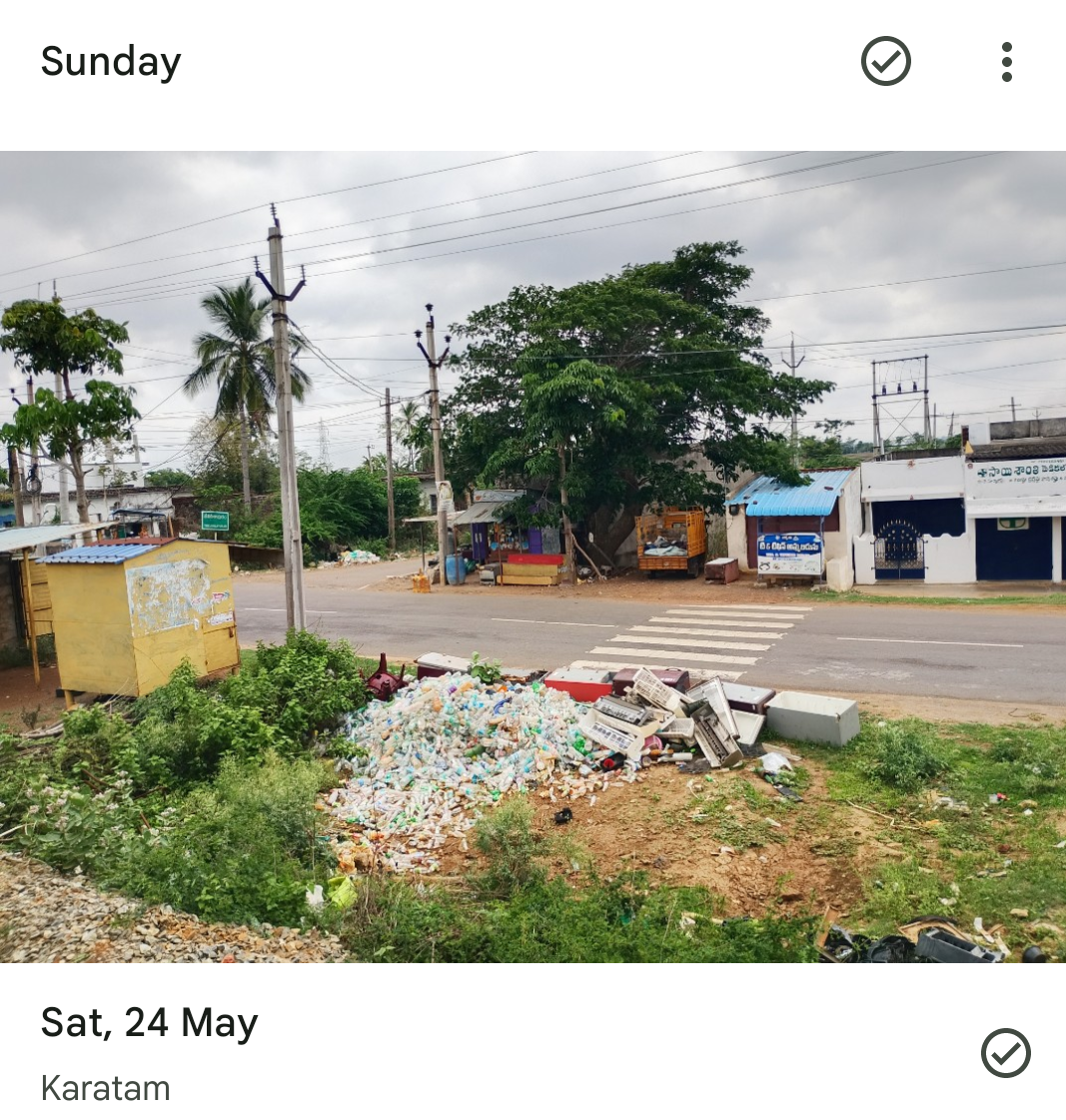
Nearly 40% of plastic is deep in the seas, and countless intentionally severed ghost nets, leading to 300,000 annual deaths of dolphins, turtles, and whales due to Ghost nets
Areas lacking sandy beaches are filled with garbage and plastic.
Several rivers contribute significantly to ocean garbage and plastic pollution. Unfortunately, until today, we did not find yet any sponsors for India. As a consquence, we had to stop the project until somebody is willing to support us.
Tanzania, Africa
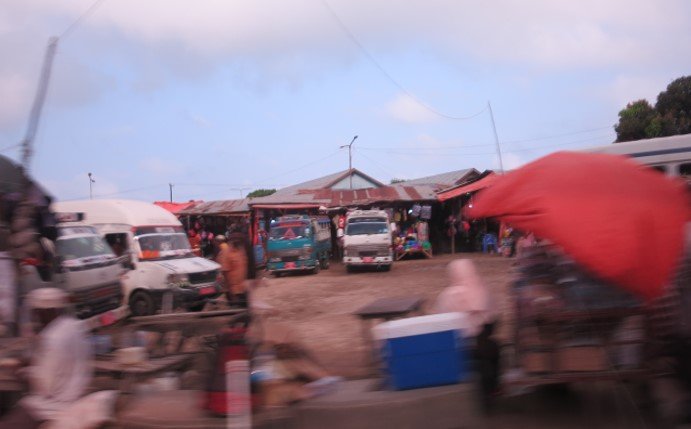
Due to the construction of one of the largest PET plastic factories in Tanzania and the fact that there is no deposit on PET bottles, there are now millions of plastic bottles in the country, in the rivers and on the beaches. We already gathered some hundred tons of plastic – and we want to reach the goal of 10’000 tons in 2028. The margin would be around ½ a million Euro, investments included. Our 1st Hub is in Pangani. Overall the potential for us are about 40’000 tons or 2 Mio US dollars of profit.
Indonesia
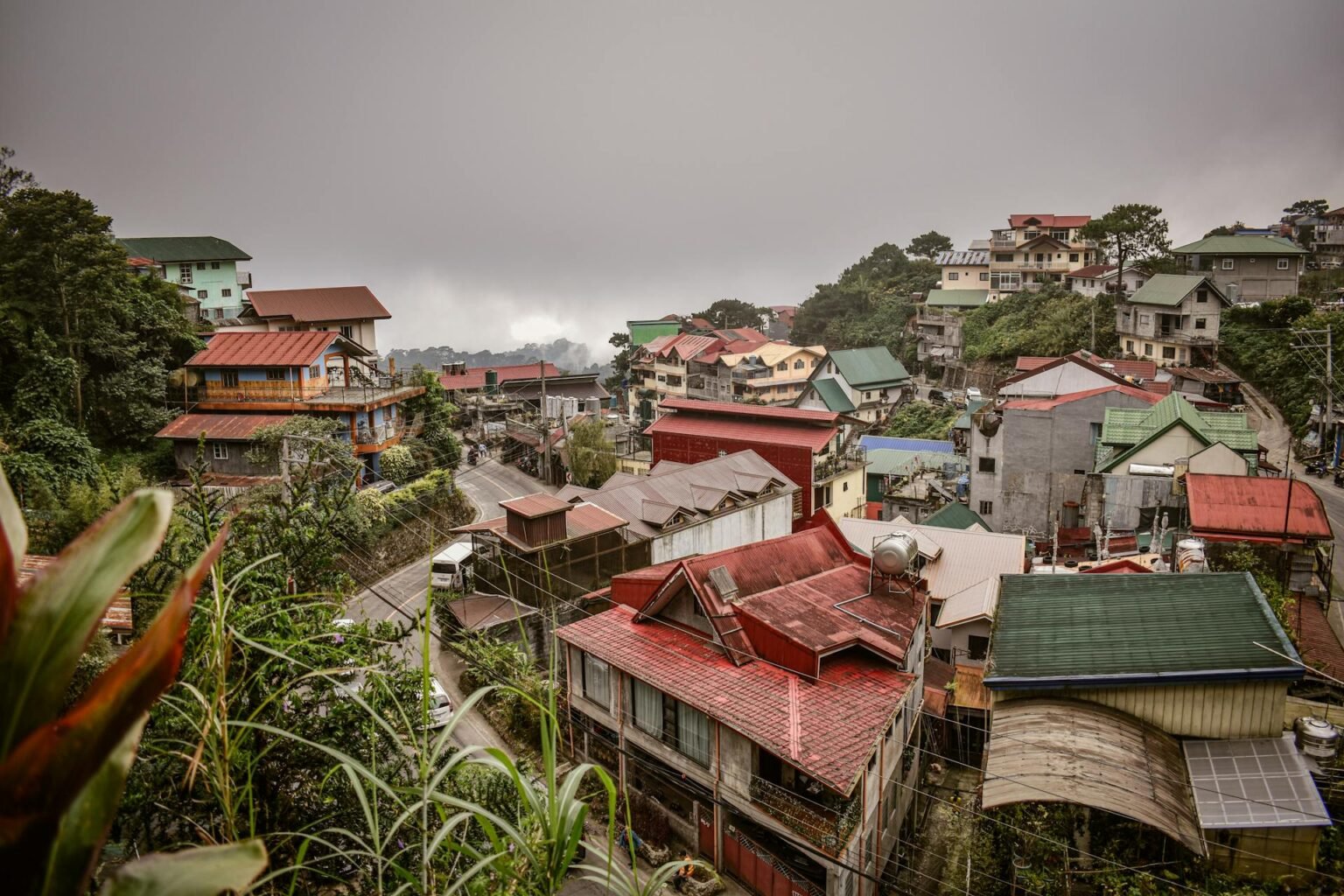
We carry out a pilot project for our new business unit GAIA in Indonesia and Malaysia. GAIA will use the natural forces of the financial market – based on Web3, especially Blockchain, and Geodata, to motivate people to collect plastic and to optimize the process and workflow.
Kenya, Africa
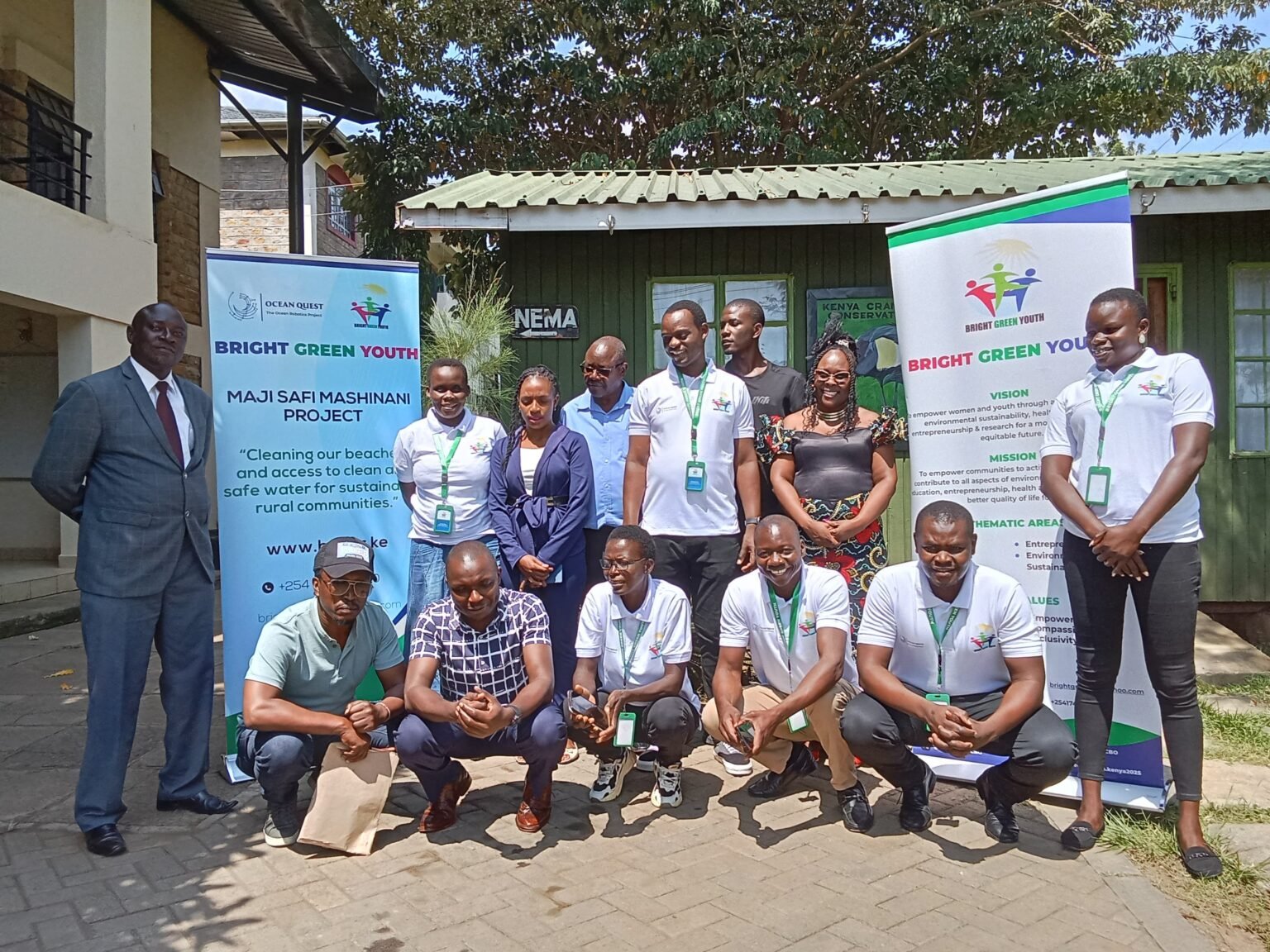
Together with Bright Green Youth, we are supporting Kenya to set-up a water tank for fresh water. We sponsored recently three events with members of the community, the government, and BGY nearby Kisumu.
1
Clean-Up
Our cleaning & surveillance robot for large harbors and big lakes is about 4 – 6 meters, a multihull, and made out of aluminum and steel and two inflatable hulls. It is driven by two powerful electrical engines and lithium batteries and optional a gas stroke engine for charging the battery during the work. This allows the use without interruption
2
Kelp Forests
We will use the Depths of the Oceans below 2500+ meters for long term- storage of 750 years (University of Stockholm), using containers made out- of bamboo. One Carbon Certificate (1t) for long-term storage is worth today in the average ca. 70 US dollars with a bandwidth between 5 US dollars (private trade) and 76 US dollars (carbon dioxide stock exchanges) Beside South-West Africa, we already started in Melbourne, Australia, and will continue in South America … But there are often restrictions like harbours, marinas, natural reserves, etc. So, there is only endless space for Kelp farms far away from the coasts, offshore! Our Vision is to plant Kelp around the Kerguelen plateau between Antarctica and the three continents.
3
Ghost Nets
Localization of deep sea ghost nets is more urgent than never before. 300'000 whales, dolphins, sharks and turtles are dying per year because they got trapped in ghost nets. You wonder? It is simply easier to cut-off old fishing nets from a trawler and use new ones, instead of taking them back to the marina and find a way to recycle them How many birds are dying for the same reason, we do not know. Some magazines were writing also about it andn estimated 2 Mio dead birds per year.
4
Ocean Farming
For mass plantation of salad, vegetables and fruit, we will need Giga Ocean Farms in future. Our new Spheres have a diameter from 4 -6 meters today – and up to 12 meters tomorrow. They can be filled with air and can be used to grow vegetable. Even first tests with salad and fruit were successful up to a depths of 20 meters. The sphere is illuminated and can be lifted and lowered autonomously like a submarine with an air & water tank – to depths with the optimum temperature. This means that we are independent of the topology of the seabed near the coast.